
How to Deliver Wedding Content in 24 Hours: A Creator’s Playbook
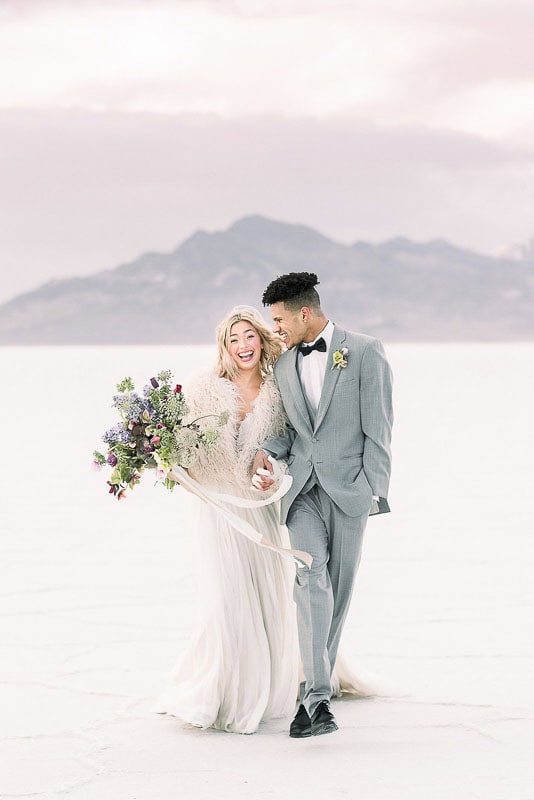
National Park Elopement Guide: Permits, Best Parks & Planning Tips for 2026
A national park elopement sounds straightforward until you start planning one. Then the questions multiply fast: Which park? Which permit office? Do you apply before or after you book a photographer? Can you actually stand on that cliff, or is that just for photos? And what happens if it rains?
This guide answers all of it — permits, costs, best parks, photography rules, and the things most couples only discover after they’ve already made a booking they can’t change. We’ve covered real elopements at Yosemite, Arches, Death Valley, Crested Butte, the Adirondacks, and Alaska — so this comes from couples who actually stood there, not from a checklist someone assembled from park websites. If you’re looking for other special venue ideas, check out our list of unique wedding venues in nature! Our Wedding Dress Ideas hub covers gowns built for outdoor mobility, useful if you’re eloping somewhere rugged.
All the parks in this guide are pinned on our interactive elopement map. Browse the full US Elopement Locations map →
Do you need a permit to elope in a national park?
Yes — in almost every case. Any ceremony inside a US national park requires a Special Use Permit from the National Park Service, regardless of how small or informal your plans are. That means two of you, an officiant, and a photographer still need a permit at most parks. Getting caught without one can mean a fine, removal from the park, and a ruined wedding day.
A few parks have slightly more lenient rules for very small groups — Olympic National Park, for example, only requires a permit if more than five people are present — but the safe rule is: assume you need one and apply early.
Photographer permits matter too. Professional photographers working inside national parks need a Commercial Use Authorization (CUA) — a separate permit from your Special Use Permit. Most established elopement photographers who specialize in national parks already hold these. Confirm before you book.
National park elopement permits: park by park
Every park handles permits differently — different fees, different designated ceremony sites, different guest limits, and different application windows. Here’s what you need to know for the most popular elopement parks.
| Park | Permit cost | Apply up to | Guest limit | Notes |
|---|---|---|---|---|
| Rocky Mountain NP, CO | $300 | 12 months | Up to 30 (site-dependent) | 13 designated sites; apply no later than 7 days before |
| Yosemite NP, CA | $150 | 12 months | Up to 50 (site-dependent) | Apply at least 21 days before; mail application + fee |
| Arches NP, UT | $185 | 12 months | Varies by site | One ceremony per location per day; timed entry Apr–Jun |
| Grand Teton NP, WY | NPS Special Use | Apply opens Dec 15 | Small groups | Applications open Dec 15 for the following year; fills fast |
| Glacier NP, MT | $125 | 12 months | Limited (5 vehicles max) | No decorations or amplified sound; rangers may be assigned |
| Olympic NP, WA | $50 | As early as possible | 5–20 (site-dependent) | Not required for 5 people or fewer total |
| Acadia NP, ME | $75 | 12 months | Varies by site | Most affordable NPS permit on this list |
| Crater Lake NP, OR | $100 ($50 app + $50 permit) | As early as possible | Varies | Allow 8 weeks for processing — permit office is slow |
| National Forest land (CO, WY etc.) | Often free or minimal | Flexible | Far fewer restrictions | Crested Butte, San Juan Mountains — more location freedom than NPS |
The best national parks to elope in — and what makes each one different
Not all national park elopements are the same experience. Some are accessible from a car park in five minutes; others involve a pre-dawn hike in the dark with headlamps and coffee. Some give you golden desert light; others give you ancient forest so quiet you can hear your own heartbeat. Here’s how the main parks compare.
Yosemite National Park, California
Permit: $150 · Best: May–October (avoid summer weekends) · Guest limit: up to 50 at some sites
Granite cliffs, Half Dome on the horizon, waterfalls, and valley meadows — Yosemite is the most iconic elopement destination in the US, and for good reason. The landscape does absolutely everything. No arch, no florals, no styling required.
Glacier Point at sunrise is the signature experience: arrive with headlamps, be at the viewpoint as the first light hits Half Dome, and have the park almost entirely to yourselves before the day visitors arrive. Taft Point at sunset — a clifftop perch above Yosemite Valley — is the alternative for couples who want drama over accessibility. El Capitan Meadow and Sentinel Beach are the best choices if you’re bringing guests.
Watch this stunning elopement at Yosemite:
No arches, chairs, or decorations permitted. No décor installations of any kind. The landscape is the décor — that’s the point. See a real Glacier Point sunrise elopement →
Arches National Park, Utah
Permit: $185 · Best: March–May, September–November · One ceremony per location per day
Natural sandstone arches in shades of burnt red and amber, carved by millions of years of wind and water. Delicate Arch at sunrise is one of the most extraordinary elopement backdrops anywhere in the world — the arch frames the sky behind your ceremony in a way that no human-built venue could ever replicate.
The NPS approves only one ceremony per day per location, so apply early and plan for a weekday. Timed entry is required from April through June — build that into your timeline so your guests aren’t stuck at the gate.
Watch this stunning Arches National Park elopement:
Rocky Mountain National Park, Colorado
Permit: $300 · Best: June–September · 13 designated ceremony sites
Alpine lakes, jagged peaks, and classic Colorado mountain scenery two hours from Denver. Emerald Lake, Dream Lake, and Sprague Lake are the standout ceremony spots — each with that particular combination of glassy water and mountain reflection that makes every photograph look like it belongs in a magazine.
You must choose from 13 designated ceremony sites — the permit does not allow ceremonies at any other location. Guest limits vary by site from 10 to 30 people. Your permit functions as your timed entry reservation, but standard entrance fees still apply to every vehicle.
Permits are nearly sold out for peak season in 2026 — apply immediately if this park is on your list.
Glacier National Park, Montana
Permit: $125 · Best: July–September · Max 5 vehicles
Going-to-the-Sun Road through some of the most spectacular mountain scenery in the world. Logan Pass, Swiftcurrent Lake, Lake Josephine, and Sun Point are the standout ceremony locations — each completely different in feel but equally extraordinary on a clear summer day.
Glacier has tightened its wedding rules considerably in recent years. No decorations, no amplified sound, no throwing anything (including confetti or petals). Maximum of five vehicles per wedding party. Rangers may be assigned to monitor your ceremony — factor that into the atmosphere you’re planning.
No ticketed entry system in 2026, but the park turns vehicles away when it reaches capacity — arrive early.
Grand Teton National Park, Wyoming
Permit: NPS Special Use · Best: June–September · Apply window opens December 15
The Teton Range rising sheer from Jackson Hole valley floor — one of the most dramatic mountain profiles in North America. Schwabacher Landing at sunrise, with the mountains reflected in the still river, is one of the most beautiful ceremony settings in the entire US national park system.
The permit application window opens at 8am MST on December 15th for the following year. Popular dates and locations fill within days — this is not an application you can treat casually. You and your partner must be the applicants; third-party submissions from planners are not accepted.
Jackson Hole has exceptional food, lodging, and wedding vendor ecosystems — everything you need is right there for the day after. Watch this video of a lovely Grand Teton elopement:
Olympic National Park, Washington
Permit: $50 (not required for 5 or fewer) · Best: June–September
Three completely different ecosystems in one park — temperate rainforest, rugged Pacific coastline, and glacier-capped mountains. It’s the most diverse landscape on this entire list. Lake Crescent for mountain-lake reflections, Hoh Rainforest for ancient moss-draped trees, Ruby Beach for dramatic sea stacks and Pacific waves.
One of the most affordable permits on this list, and one of the most permitting-friendly parks for very small elopements — five people or fewer requires no permit at all. Build in extra driving time between locations; this park is enormous.
Death Valley National Park, California
Permit: NPS Special Use · Best: October–April ONLY · Never in summer
The most otherworldly landscape in the US — sand dunes, salt flats, volcanic craters, and canyon walls in colours that seem impossible. Mesquite Flat Sand Dunes at sunrise is one of the most spectacular elopement backdrops anywhere on earth. The colours of Zabriskie Point at first light are extraordinary in a completely different way. Watch this beautiful elopement at Death Valley:
Never visit in summer. Temperatures regularly exceed 120°F and can be genuinely lethal. October through April is the window. See a real Death Valley sand dunes elopement →
Crested Butte & the San Juan Mountains, Colorado (National Forest)
Permit: minimal or free · Best: July–August for wildflowers · Far more flexible than NPS land
The wildflower capital of Colorado. In July, the meadows above Crested Butte are carpeted in wildflowers beneath snow-capped peaks — an image so extraordinary that couples travel cross-country just for this two-week window. National Forest land means far more freedom on ceremony location, décor, guest count, and timing than any national park.
The San Juan Mountains near Telluride and Silverton offer equally dramatic scenery with the same permitting flexibility. If you’ve been frustrated by NPS restrictions, National Forest land is worth serious consideration. See Natalie & Ed’s real Crested Butte wildflower elopement → and Alicia & Andrew’s San Juan Mountains elopement →
Quick guide: which park suits you?
| If you want… | Go here |
|---|---|
| The most iconic landscape in the US | Yosemite — Glacier Point or Taft Point |
| Desert + red rock + extraordinary light | Arches, Death Valley, or Joshua Tree (Oct–Apr only) |
| Wildflowers in peak bloom | Crested Butte (July–Aug) or RMNP (June–Sept) |
| Most permitting flexibility | National Forest land — Crested Butte, San Juans |
| Pacific Northwest drama | Olympic NP — rainforest + coast + mountains in one park |
| Most dramatic mountain profile | Grand Teton NP — Tetons rising from flat valley floor |
| Lowest permit cost | Olympic ($50) or Acadia ($75) |
| Remote wilderness, true solitude | Denali, Alaska — North America’s wildest park |
| East Coast — no cross-country flight | Acadia (ME), Shenandoah (VA), Great Smoky Mountains (TN/NC) |
The national park elopement permit process — step by step
The process varies slightly by park, but the broad shape is the same for almost all of them.
1. Choose your park and ceremony location. Each park has a list of approved ceremony sites — you don’t get to pick any spot in the park. Download the site list from the NPS website for your specific park before falling in love with a particular viewpoint.
2. Pick your date — and a backup date. Parks with limited availability (Rocky Mountain NP, Grand Teton) need a backup date built into your application. Weather in national parks is genuinely unpredictable and your permit doesn’t guarantee conditions.
3. Download and complete the application. Find the Special Use Permit application on the NPS page for your specific park — not a general NPS page. Include your ceremony date, location preference, estimated guest count, and officiant details.
4. Submit with payment. Some parks accept applications online; others require a mailed application with a check. Rocky Mountain NP accepts applications up to 12 months in advance. Yosemite requires submission at least 21 days before your date. Grand Teton’s window opens December 15th.
5. Wait for approval. Processing times range from a few days (Yosemite) to eight weeks (Crater Lake). Don’t book flights or non-refundable accommodation until your permit is confirmed.
6. Print your permit and bring it on the day. Rangers can and do check. Keep a copy on your phone as backup.
Book your photographer before you submit your permit. A good elopement photographer who specialises in your specific park will know which ceremony sites have the best light at what time of day, help you choose between locations, and walk you through the permit process. This is not just photography advice — it’s planning advice.
Rules that apply at almost every national park
Before you imagine your ceremony in detail, check these restrictions — they apply at most NPS sites and catch couples off-guard every season.
No arches or structures. Ceremony arches, backdrops, and any installed decorations are prohibited at virtually all national park ceremony sites. No exceptions.
No chairs. Unless medically necessary, seating is not permitted at ceremony sites. Ceremonies are standing.
No amplified sound. Speakers, microphones, and amplified music are prohibited at most parks. Glacier bans it entirely. Some parks allow acoustic instruments.
No throwing anything. Confetti, rice, flower petals, and birdseed are all prohibited. Leave no trace applies to everything.
No exclusive use. Your permit gives you the right to hold a ceremony at a designated site — it does not close the site to other park visitors. On a busy summer weekend, other hikers and photographers will be present. This is unavoidable at popular sites; early morning start times minimise it significantly.
Flowers: handheld only. Most parks allow the couple to carry a bouquet and boutonnière during the ceremony. Installed floral arrangements and anything left behind are prohibited.
What does a national park elopement actually cost?
| Cost item | Typical range |
|---|---|
| Special Use Permit | $50–$300 |
| Park entrance fee (per vehicle) | $30–$35 |
| Elopement photographer (specialist) | $2,500–$6,500+ |
| Officiant | $200–$600 |
| Marriage licence | $35–$100 (state-dependent) |
| Lodging | $150–$800+ per night |
| Flowers (handheld bouquet) | $100–$400 |
Most national park elopements total $3,000–$10,000 once you include travel and lodging. Compare that to the average US wedding at $33,000–36,000, and it becomes clear why this choice makes sense for so many couples — not just romantically, but financially.
Planning your national park elopement: what to do first
Start with your photographer, not your park. A specialist elopement photographer who knows your park — knows which sites get the best light when, which locations are consistently overcrowded, and which permit office runs slowly — is the most valuable planning resource you have. Book them first, then let them help with everything else.
Apply for the permit as soon as possible. For Rocky Mountain NP, Grand Teton, and Arches, ‘as soon as possible’ means the day the application window opens. For other parks, six months in advance is a safe minimum for peak season dates.
Don’t book non-refundable travel before permit approval. Processing times vary — Yosemite is fast, Crater Lake is notoriously slow. Wait for your permit confirmation before locking in flights and accommodation.
Plan for an early start. Sunrise gives you the best light, the fewest other visitors, and that particular quality of stillness that makes a national park ceremony feel genuinely private — even if it technically isn’t. Most experienced elopement photographers will strongly recommend it.
Have a weather backup. Mountains create their own weather systems. Afternoon thunderstorms are common at altitude in summer. A good elopement photographer has a second location ready — this is part of what you hire them for.
For the complete elopement planning guide — permits, photography, what to wear, legal requirements, packing list, and what to do after: Open The Complete Elopement Planning Guide →
Prefer a more sheltered setting? Our guide to barn wedding venues across the US offers a beautiful alternative to outdoor elopement locations.
Frequently asked questions
Do I need a permit to elope in a national park?
Yes, almost universally. Any ceremony with an officiant, photographer, or structured exchange of vows requires a Special Use Permit, even if it’s just the two of you. The only exception is Olympic National Park, which does not require a permit for groups of five or fewer. Permit fees range from $50 to $300 depending on the park.
Does the photographer also need a permit?
Yes. Professional photographers and videographers working commercially inside national parks require a separate Commercial Use Authorization (CUA). Most established elopement photographers who specialise in national parks already hold one for their primary parks — confirm this before booking. Some parks also require videographers to hold separate permits.
Can I elope at any spot in a national park?
No. Ceremonies must take place at designated ceremony sites approved by the NPS for your specific park. Rocky Mountain NP has 13; Yosemite has multiple approved locations in each section of the park. You cannot apply for a permit at a random viewpoint or trailhead. Download the approved site list from your park’s NPS website before planning.
How far in advance should I apply?
As early as possible — most parks accept applications up to 12 months in advance, and peak-season dates at popular parks fill extremely fast. Rocky Mountain NP is nearly sold out for May–October 2026. Grand Teton’s application window opens December 15th each year. For Crater Lake, allow eight weeks for processing. Six months minimum for any summer or fall date at any popular park.
Can we have guests at a national park elopement?
Yes — guest limits vary by park and ceremony site. Yosemite allows up to 50 at some locations. Rocky Mountain NP allows 10–30 depending on the site. Glacier NP limits you to five vehicles total, which effectively caps your group size. Olympic NP requires no permit at all for five people or fewer. Check the specific site’s guest limit before committing to any location if family attendance matters.
Is National Forest land easier than a national park?
Significantly. National Forest land — which includes Crested Butte and the San Juan Mountains in Colorado — offers much more flexibility on ceremony location, guest count, décor, and timing than NPS land. You’re not restricted to designated sites. You can bring an arch. You can have more guests. The scenery is equally extraordinary. If NPS restrictions feel limiting, National Forest elopements are worth serious consideration.
More elopement planning from Bespoke Bride:
- Elopement Ideas & Planning Hub — interactive map + complete planning guide
- Where to Elope in the US: 20 Best Locations for 2026
- The Complete Elopement Planning Guide — permits, photography, legal, packing
- Natalie & Ed’s Crested Butte Wildflower Elopement
- Amy & Jake’s Arches National Park Sunrise Elopement
- Glacier Point Sunrise Elopement — Yosemite
- Top Destinations for Eloping in Alaska
- Amanda & Nick’s Fall Elopement in the Adirondack Mountains
- Micro Wedding Planning Hub — for couples who want something slightly bigger
- About the Author
- Latest Posts

Alyssa Geib is a contributing writer at Bespoke Bride with over 10 years of experience as an on-location bridal stylist and hair & makeup artist, working with wedding clients across New Jersey, Pennsylvania, New York, Colorado, and Ohio, and with brands including Anastasia Beverly Hills, Laura Geller, and Tarte Cosmetics. Alongside her styling work, Alyssa has spent over a decade talking directly with brides about their engagements, collecting real proposal stories that inform her writing. She brings that firsthand access, paired with her styling and beauty expertise, to her coverage of weddings, proposals, and creative celebrations, helping couples navigate the planning process with confidence.