

How to Choose Jewelry That Complements Every Part of Your Wedding Day
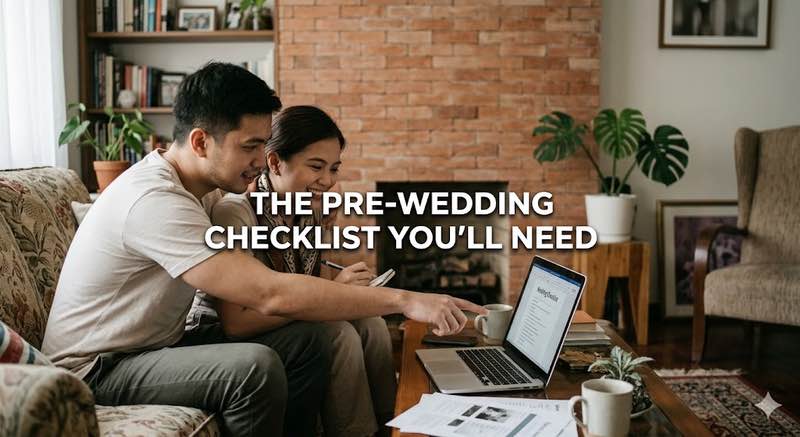
The Pre-Wedding Checklist Every Couple Needs: From Prenups to Final Fittings
I still remember sitting at my kitchen table with a lukewarm coffee and roughly forty-seven browser tabs open, convinced I was forgetting something important. The venue was booked. The dress was ordered. The florist had been called three times. And yet that low-grade panic — the one that lives in your chest from the moment you get engaged to approximately five minutes after you say “I do” — just wouldn’t quit.

What nobody tells you is that the checklist people hand you at bridal shows almost always starts at the wrong place. They jump straight to save-the-dates and cake tastings. But there are a handful of decisions that need to happen before any of that, and getting them right sets the tone for everything else.
This is that list — the pre-wedding checklist we wish someone had handed us on day one, covering everything from prenuptial agreements to the final fitting, in the order that actually makes sense.

Key Takeaway: The most important pre-wedding tasks aren’t the ones that show up on Pinterest boards. A complete pre-wedding checklist starts with financial and legal conversations (like a prenup), moves through the big logistics, and closes with the physical details (like dress fittings and vendor payments) in the final weeks. Couples who tackle them in order experience significantly less last-minute stress — and are more legally and emotionally prepared for marriage itself.
Why More Couples Are Getting Prenups (And Why It’s a Good Thing)
Let’s get this out of the way: a prenup isn’t planning for divorce. It’s planning for your marriage. Think of it as a financial conversation you’re having now, while you actually like each other, instead of leaving it to a courtroom later. Newsweek’s reporting on why millennials are getting prenups at 10x the rate of boomers gives great context on the financial mindset shift that’s reshaping the whole pre-wedding conversation, including how couples are thinking about the entire planning phase more intentionally.
More couples than ever are choosing to get prenups, and it’s not just the wealthy. If you have savings, student loans, a side business, a retirement account, or even just strong opinions about how finances should work in your relationship, a prenup gives you a way to put that in writing.
So what does a prenup actually cover? Here are some of the most common things couples include:
- How property and assets will be handled during the marriage
- What happens with debts each person brings in
- Spousal support terms
- Protections for a business or freelance income
- How joint bank accounts and shared expenses will work
The cost of getting a prenup through a lawyer can run anywhere from $2,500 to $10,000+, which puts it out of reach for a lot of couples. That’s starting to change — platforms like prenups.ai now let couples create a state-specific prenuptial agreement online for a fraction of the cost, which is making prenups accessible to people who would have otherwise skipped them entirely.
The ideal time to start the conversation is 3 to 6 months before the wedding. It doesn’t have to be awkward — frame it as getting on the same financial page before you say “I do.”
Millennials are now leading the charge: roughly 39% have a prenup compared to just 4% of baby boomers, and as of 2025, over 52% of prenups are now initiated by women. For a full breakdown of what a prenuptial agreement actually covers and how to get one, The Knot’s prenup guide is one of the clearest resources out there.
Soundbite: “A prenup isn’t a lack of trust — it’s a love language for the financially honest.”
Prenup vs. No Prenup: What’s the Difference?
| Factor | With a Prenup | Without a Prenup |
|---|---|---|
| Asset division | You and your partner decide | State law decides |
| Debt liability | Can be ring-fenced to the individual | May become shared |
| Business interests | Protected as separate property | Potentially split as marital property |
| Spousal support | Terms defined in advance | Left to a judge |
| Cost to set up | $300–$10,000+ depending on method | $0 upfront |
| Cost if things go wrong | Much lower (terms already set) | Potentially tens of thousands |
Is Your Wedding Legally Covered? The Paperwork You Can’t Skip
Your marriage license is not the same as your marriage certificate. I know — I had to Google it too.
The direct answer: Apply for your marriage license 30 to 60 days before your wedding date, and confirm your county’s specific requirements, because they vary wildly by state.
Here’s what this phase actually involves:
How to Handle Your Marriage License (Step by Step)
- Check your county clerk’s website for specific ID requirements.
- Both partners must appear in person at the clerk’s office in most states.
- Confirm the waiting period — some states require 3 to 5 days after issuance.
- Verify the expiration window (usually 30 to 90 days).
- Give your signed license to your officiant before the ceremony.
- After the wedding, confirm your officiant filed it — then request your certified marriage certificate.
The difference between a license and a certificate trips up more couples than you’d think. Zola’s complete guide to marriage licenses breaks down state-by-state requirements clearly and is worth bookmarking as a reference when you start the process.
As of 2026, 87% of couples pour enormous energy into aesthetics — but forgetting to file your license is the kind of mistake that has real legal consequences. Don’t be that couple.
Watch this video to learn more on how to get married at a Courthouse:
Soundbite: “Your marriage license is the most unglamorous, most important piece of paper in your entire wedding planning process.”
Is Your Venue Contract Actually Protecting You?
Direct answer: Every venue contract should include a force majeure clause, a clear cancellation and refund policy, and explicit terms around what’s included in your rental fee.
This one comes from personal experience. A friend of mine discovered — three weeks before her wedding — that her venue contract technically allowed them to book another event in the adjoining space on the same night. She had assumed “exclusive use” was implied. It was not.
Before you sign anything:
- Confirm what “exclusive use” actually means in writing
- Ask about overtime fees if your reception runs long
- Clarify who handles cleanup — and what happens if something breaks
- Review the force majeure clause for weather or emergency cancellations
- Get the final payment deadline in writing
The average wedding involves 10 to 15 vendors, and booking them in the wrong order can cost you thousands in last-minute fees. The Knot’s wedding venue contract guide — written with input from an actual lawyer — is a solid starting point for knowing exactly what to look for before you put pen to paper.
Watch this video for more useful tips:
Soundbite: “A venue contract without a force majeure clause is a venue contract working for the venue, not for you.”
Vendor Booking Timeline at a Glance
| Timeline | What to Book | Why It Can’t Wait |
|---|---|---|
| 12–18 months out | Venue, photographer, videographer | These book up fast in peak season |
| 10–12 months out | Caterer, DJ or band, officiant | Availability drops sharply after 12 months |
| 6–9 months out | Florist, hair & makeup, transportation | Lead times for seasonal flowers and trials |
| 4–6 months out | Wedding dress ordered, stationery | Gowns take 6–9 months to arrive |
| 2–3 months out | First dress fitting, cake tasting | Allows time for alterations and adjustments |
| 4–6 weeks out | Final confirmations with all vendors | Ironing out any last-minute changes |
| 1–2 weeks out | Final dress fitting, final payments | Bring shoes and all accessories to the fitting |
Have You Actually Talked About Money? The Financial Conversations Before Marriage
Direct answer: Beyond a prenup, engaged couples should align on three things before the wedding: a joint account strategy, a debt transparency conversation, and a plan for managing wedding costs together.
This doesn’t have to be a big dramatic meeting. We sat down with a bottle of wine, a shared spreadsheet, and a policy of zero judgment. It took about two hours and saved us from at least six arguments we would have had in year one.
Things worth discussing:
- Will you combine finances fully, partially, or keep them separate?
- Who has student loan debt, and how will payments be handled?
- What’s the honest budget for the wedding — and where are you willing to cut?
- How will you handle financial emergencies as a team?
Nearly one-third of couples now enter marriage with more debt than savings, and 77% of those with student debt said they would consider a prenup as part of their financial planning. A 2024 Fidelity study also found that 1 in 4 couples identify money as their greatest relationship challenge — which makes the conversation worth having now, before you share a joint account. Bankrate’s guide on how to talk about finances before marriage has a practical framework for structuring these conversations if you’re not sure where to start.
Soundbite: “Getting on the same financial page before the wedding is the kind of intimacy nobody talks about — and the kind that actually lasts.”
Watch this awesome TED talk to learn more tips:
What Does Your Dress Fitting Schedule Actually Look Like?
Direct answer: Most brides need three fittings: a first fitting around 8 to 10 weeks before the wedding, a second fitting 4 to 6 weeks out, and a final fitting 1 to 2 weeks before the big day.
Wedding dresses can take up to nine months to be designed and delivered, and you’ll typically need about two months to start alterations — so contact your bridal shop early to understand their specific delivery dates. According to industry data, 95% of brides need some form of alteration on their wedding dress, and the process takes 6 to 8 weeks on average with 2 to 3 fittings.
My experience: I underestimated how much my body would change between ordering and delivery. I had to have the dress let out slightly and then taken in after the first fitting. This is completely normal, and it’s exactly why you don’t wait until the last minute to start alterations.
What to bring to every fitting:
- The exact shoes you’ll wear on the wedding day (hemline is set based on these)
- Your undergarments and any shapewear
- A hair clip to mock up your updo if applicable
- One trusted opinion — not six
Soundbite: “Your final dress fitting is the moment the whole thing becomes real — protect it by giving yourself enough time to actually enjoy it.”
Watch this video for more tips:
The Final 30 Days: What Needs to Happen Before You Walk Down the Aisle
Direct answer: The final month of wedding planning is about confirmation, not creation. Every major decision should already be made — this phase is logistics, payments, and emotional preparation.
Your Final 30-Day Pre-Wedding Checklist:
- Confirm arrival times, setup schedules, and day-of contacts with every vendor
- Submit final guest headcount to your caterer (most require this 2–3 weeks out)
- Prepare final vendor payments in labeled envelopes — include tips
- Attend your final dress fitting (bring shoes and all accessories)
- Pick up your wedding dress and steam or press it
- Confirm your marriage license is in hand and give it to your officiant
- Share the day-of timeline with your wedding party and all vendors
- Prepare an emergency kit (fashion tape, stain remover, pain reliever, blister pads)
- Break in your wedding shoes — wear them around the house for at least a week
- Attend your rehearsal and rehearsal dinner
- Pack for your honeymoon — check passport expiration dates
- Build in time to actually breathe
After the wedding, confirm that your officiant has filed the marriage license and request your official marriage certificate. It’s the last box on the checklist that most people forget until they need it.
FAQ: Pre-Wedding Checklist Questions We Actually Get Asked
How far in advance should we start the prenup conversation? Ideally 3 to 6 months before the wedding. This gives both partners time to review, ask questions, and sign without feeling rushed. Rushing a prenup at the last minute can actually invalidate it in some states.
When should I order my wedding dress? Allow 6 to 9 months for delivery if you’re ordering from a bridal salon, especially for made-to-order gowns. Alterations typically begin about 2 months before the wedding.
Do we legally need a prenup? No — but it’s worth the conversation. As of 2026, 50% of Americans support the use of prenups, up from 42% the year before. The decision is personal, not a reflection of how strong your relationship is.
What’s the difference between a marriage license and a marriage certificate? A marriage license is what allows the ceremony to happen — you get it beforehand. A marriage certificate is the official record of your marriage, issued after the ceremony is complete and the license is filed by your officiant.
What happens if we skip a vendor contract review? You’re exposed. Always read the cancellation policy, overtime fees, and exclusivity terms before signing. If something feels vague, ask for written clarification before you hand over a deposit.
How many dress fittings do I need? Most brides need two to three. The final fitting should happen 1 to 2 weeks before the wedding — close enough that your measurements won’t shift significantly, far enough to fix anything unexpected.
A Final Word
Wedding planning is genuinely hard. There’s no version of it where everything goes smoothly and nothing gets missed. But the couples who come out the other side feeling good — not just relieved, but actually good — tend to be the ones who handled the big-picture stuff first.
Prenup. Contracts. Money conversations. Then the dress, the florals, the seating chart.
Get the foundation right, and everything else gets a little lighter.

- About the Author
- Latest Posts

Daria Kapitonova is a wedding photographer and co-founder of a husband-and-wife photography studio alongside her partner Mike. Together they specialise in documentary-style wedding coverage with a strong emphasis on candid moments and emotional storytelling — the parents’ expressions during the ceremony, the unscripted exchanges between the couple, the details that only exist for a single day. Their approach treats every wedding as a distinct visual story rather than a formula, adapting their coverage to the specific people, venue, and atmosphere of each celebration. Daria’s writing for Bespoke Bride draws on her hands-on experience photographing real weddings, offering couples practical insight into what makes wedding photography genuinely memorable.